a boon for women farmers in Cambodia
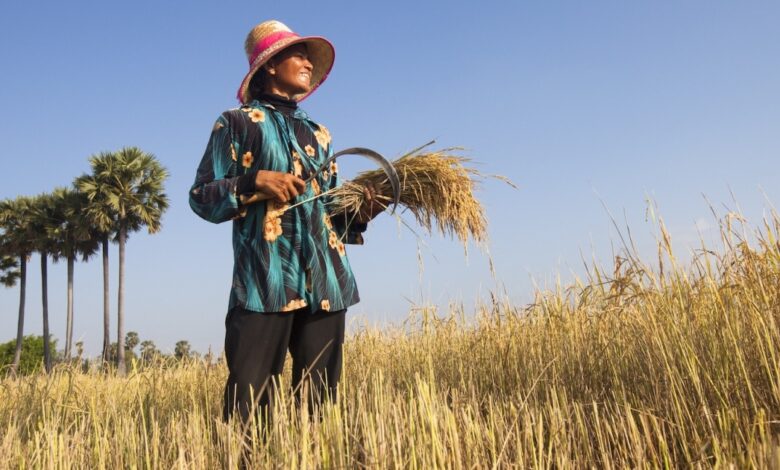
Upfront equipment costs can be a significant barrier for low-income rural women like Heng. They face greater challenges in accessing loans from traditional banks due to their lack of collateral and limited financial history and literacy.
Innovative financing mechanisms, such as the ones provided by EmPower, are considered crucial for supporting women’s access to renewable energy technologies.
Renewable energy is both sustainable and reliable, with lower operating costs and less maintenance than fossil-fuel-based power systems.
Renewable energy also benefits women by replacing traditional fuels, like coal, that contribute to indoor air pollution and respiratory diseases. This is particularly relevant in countries like Cambodia, where access to modern energy services still lags.
According to one estimate by UNEP, the solar photovoltaic systems installed in Bangladesh, Cambodia and Viet Nam as part of the EmPower project could prevent the release of 15,000 tonnes of carbon dioxide equivalent throughout their expected lifecycle.
So far, EmPower has supported 473 women entrepreneurs and created a model that is ready to be scaled up. The project also helped more than 50 women-focused organizations participate in decision-making on issues related to climate change, renewable energy and disaster risk reduction.
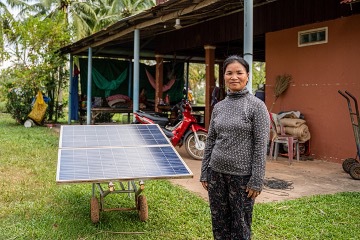
Duek Da is a farmer from Takeo province whose land has been severely impacted by flooding and drought. She relies on agriculture to support her three children, two of whom are in university.
In 2022, Da started using a solar water pump to grow corn and morning glory, also known as water spinach. Like Im Heng, Da said she feels more secure because she has a reliable water supply and isn’t dependent on fossil-fuel-burning generators or the electric grid for power.
Da was the first person in her community to buy solar panels. Some 60 per cent of the costs were subsidized, allowing her to save money in the long run.
[ad_2]
Read More