The Shadow Pandemic: Violence against women during COVID-19
Campaign | Fast facts | Learn and share | Take action | Our work | Resources
The issue
One in three women worldwide experience physical or sexual violence mostly by an intimate partner. Violence against women and girls is a human rights violation.
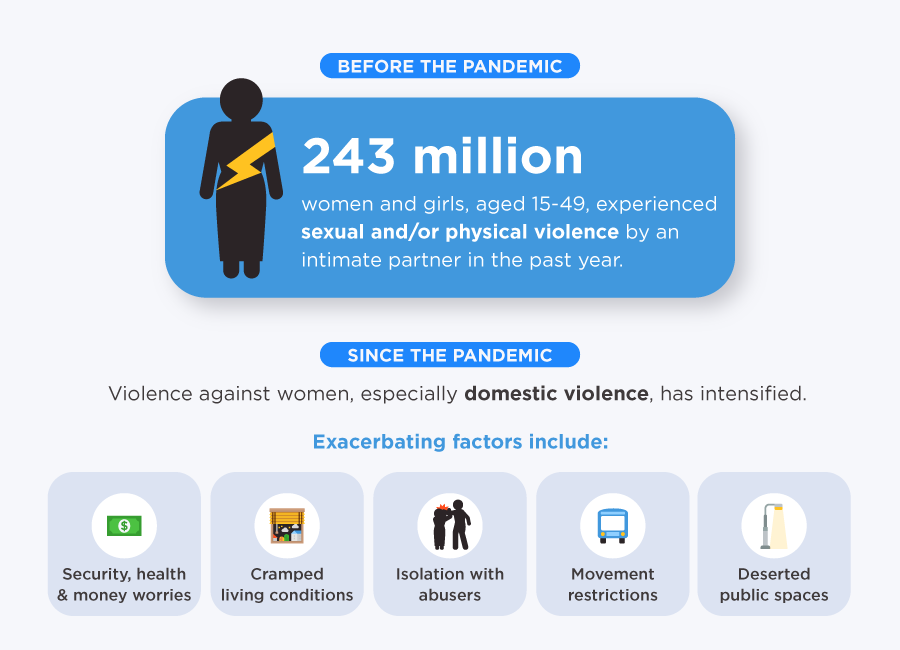
Since the outbreak of COVID-19, emerging data and reports from those on the front lines, have shown that all types of violence against women and girls, particularly domestic violence, has intensified.
This is the Shadow Pandemic growing amidst the COVID-19 crisis and we need a global collective effort to stop it. As COVID-19 cases continue to strain health services, essential services, such as domestic violence shelters and helplines, have reached capacity. More needs to be done to prioritize addressing violence against women in COVID-19 response and recovery efforts.
Everyone has a role to play.
UN Women is providing up-to-date information and supporting vital programmes to fight the Shadow Pandemic of violence against women during COVID-19.
Feature: The Shadow Pandemic Campaign
UN Women, the United Nations entity dedicated to gender equality and the empowerment of women, today launched the Shadow Pandemic public awareness campaign, focusing on the global increase in domestic violence amid the COVID-19 health crisis. The Shadow Pandemic public service announcement is a sixty-second film narrated by Academy Award-winning actor Kate Winslet, who has championed many humanitarian causes. The video highlights the alarming upsurge in domestic violence during COVID-19 and delivers a vital message urging people to act to support women if they know or suspect someone is experiencing violence. See full press release ►
Videos
Fast facts
- Globally, even before the COVID-19 pandemic began, 1 in 3 women experienced physical or sexual violence mostly by an intimate partner
- Emerging data shows an increase in calls to domestic violence helplines in many countries since the outbreak of COVID-19.
- Sexual harassment and other forms of violence against women continue to occur on streets, in public spaces and online.
- Survivors have limited information and awareness about available services and limited access to support services.
- In some countries, resources and efforts have been diverted from violence against women response to immediate COVID-19 relief.
Learn and share
Take action
How you can help
Our work
UN Women focuses on six areas in its COVID-19 response:
During COVID-19, UN Women is working on prevention of violence and access to essential services, such as health, justice and policing, social services, helplines and coordination of these services, to provide support to those who have experienced and/or witnessed violence.
Resources
[ad_2]
Read More